How to Fix an Uncomfortable Office Chair Without Buying a New One
Fix an uncomfortable office chair with practical ergonomic upgrades: lumbar support, seat cushions, footrests, armrest setup, and Amazon affiliate product picks.
Affiliate disclosure: Smart Workspace Guide may earn a commission from qualifying purchases made through Amazon links. This does not change your price.
An uncomfortable office chair does not always need to be replaced. If the frame is stable and the seat height works for your desk, the biggest comfort gains usually come from better lower-back support, seat pressure relief, foot support, and small posture adjustments.
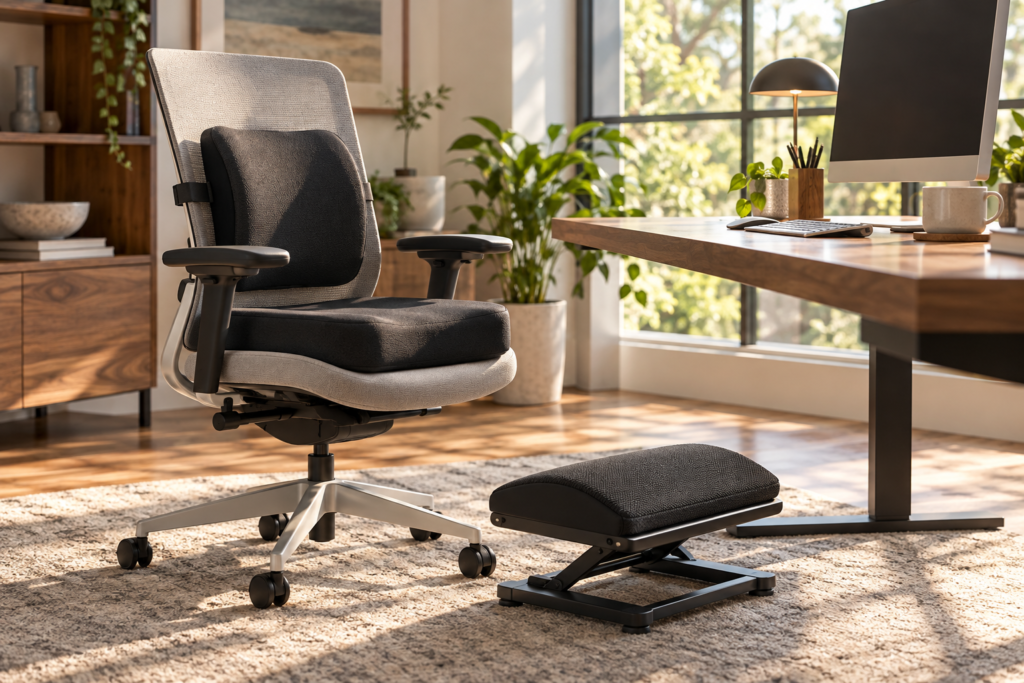
Before buying a new chair, fix the three most common problems: add real lumbar support, remove pressure under the thighs, and support your feet so your hips and knees can relax.
Quick picks
- Best premium option: Everlasting Comfort Lumbar Support Pillow
- Best practical option: ComfiLife Gel Enhanced Seat Cushion
- Best flexible option: Kensington SoleMate Adjustable Footrest
Comparison table
| Product | Best for | Check first | Amazon |
|---|---|---|---|
| Everlasting Comfort Lumbar Support Pillow | Adding lower-back support to a basic chair | Choose a cushion that supports the lower back without pushing you too far forward on the seat. | Amazon |
| ComfiLife Gel Enhanced Seat Cushion | Reducing seat pressure during long work sessions | Measure your seat depth and remember the cushion will raise your sitting height. | Amazon |
| Kensington SoleMate Adjustable Footrest | Supporting feet when the desk or chair height is not ideal | Look for enough surface area to move your feet, not just a tiny platform. | Amazon |
Recommended products
Everlasting Comfort Lumbar Support Pillow
Best for: Adding lower-back support to a basic chair
A removable lumbar cushion can help fill the gap between your lower back and a chair that lacks meaningful back support.
Before you buy: Choose a cushion that supports the lower back without pushing you too far forward on the seat.
ComfiLife Gel Enhanced Seat Cushion
Best for: Reducing seat pressure during long work sessions
A seat cushion can make a firm chair more tolerable when the seat pan is causing pressure or discomfort.
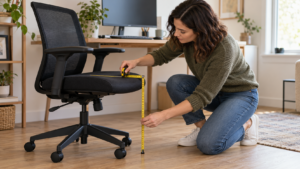
Before you buy: Measure your seat depth and remember the cushion will raise your sitting height.
Kensington SoleMate Adjustable Footrest
Best for: Supporting feet when the desk or chair height is not ideal
A footrest is often the simplest fix when your feet do not rest flat after setting the chair to a keyboard-friendly height.
Before you buy: Look for enough surface area to move your feet, not just a tiny platform.
How to choose the right option
Start with your actual desk workflow. A good product should solve one clear problem: lower-back support, seat pressure relief, foot stability, or better arm and shoulder position. Avoid buying the most expensive option unless you will use the extra capability every day.
For Amazon shopping, open each product page and confirm the current price, return window, compatibility notes, and recent customer photos. Product listings can change, so the safest buying habit is to match the model name and specifications before checkout.
Setup tips that matter
- Start with chair height: your feet should rest flat on the floor or on a footrest, with knees close to hip height.
- Add support in one place at a time: test lumbar support first, then seat cushioning, then foot support so you know what actually helped.
- Do not over-pad the chair: too much cushion can raise you too high and make the desk feel worse.
- Recheck monitor height: chair changes often require a small screen or laptop stand adjustment.
Related workspace guides
- Read next: ergonomic chairs under $300
- Read next: best under-desk footrests
- Read next: home office ergonomics guide
FAQ
Can a cushion really fix a bad office chair?
It can help if the chair frame is stable and the problem is pressure, missing lumbar support, or foot position. It will not fix a broken mechanism or a chair that is the wrong size.
Should I buy lumbar support or a seat cushion first?
Start with the pain point. Lower-back fatigue usually points to lumbar support. Tailbone or thigh pressure usually points to a seat cushion or chair-height issue.
When should I replace the chair instead?
Replace it if the cylinder sinks, the backrest cannot support you, the seat is too small, or the chair causes discomfort even after basic adjustments.
Sources and product research
This guide was prepared from manufacturer product information, practical home-office setup criteria, and Amazon product research for: Everlasting Comfort Lumbar Support Pillow, ComfiLife Gel Enhanced Seat Cushion, Kensington SoleMate Adjustable Footrest.
- OSHA computer workstation chair guidance
- OSHA workstation evaluation checklist
- OCWR computer workstation setup
About The Author