10 Types of Office Chairs: Which One Fits Your Home Office?
Compare 10 types of office chairs, from full-mesh and adaptive-lumbar models to compact, big-and-tall and active-sitting options.
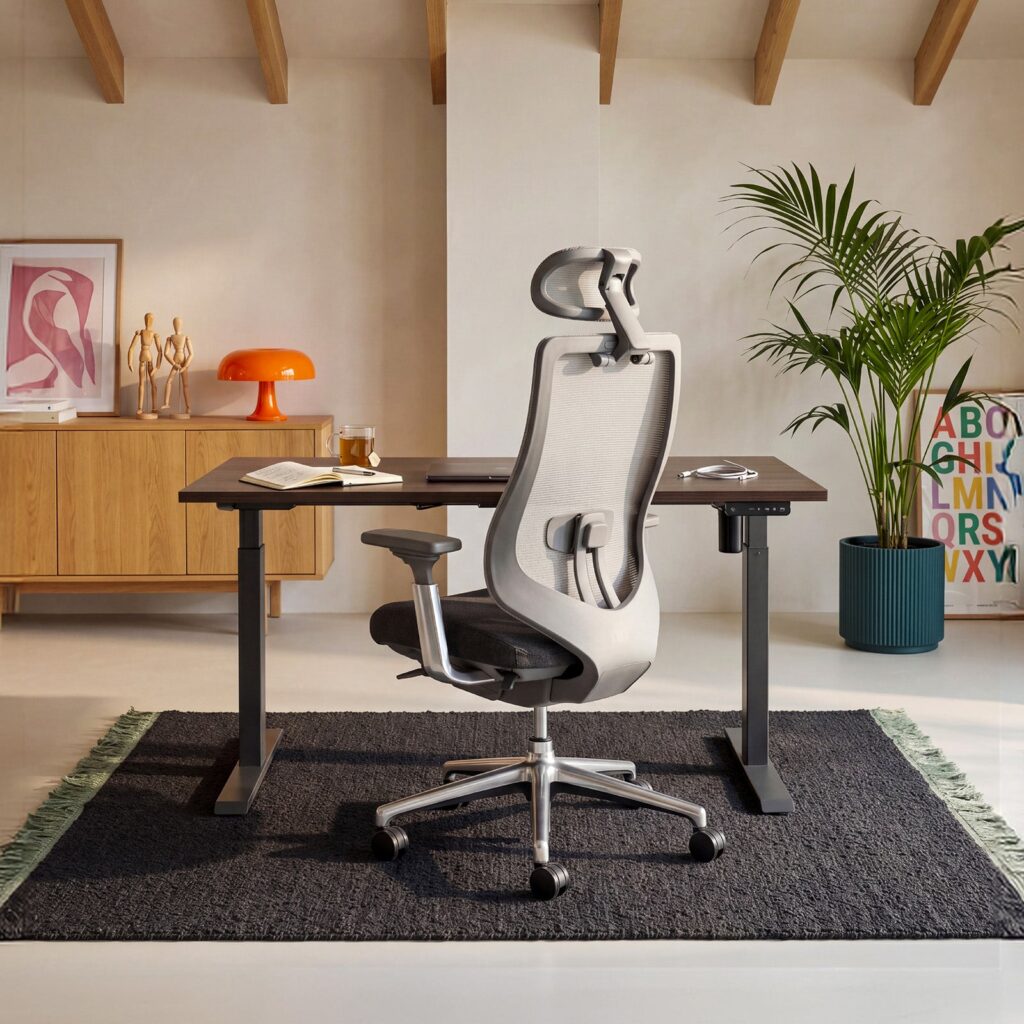
The best office chair is not a single model. It is the type of chair whose dimensions, adjustment range and movement match your body, desk and workday. A compact task chair can be a better purchase than a large ergonomic chair in a small room. A full-mesh chair may suit a warm office, while a padded executive chair may suit someone who values a softer seat. Alternative designs such as kneeling chairs and saddle stools can add movement, but they should not be treated as automatic replacements for an adjustable desk chair.
This guide compares ten common office-chair types, the technology or mechanism that makes each one different, and what to verify before ordering. Product names are examples for comparison, not claims that we performed hands-on testing. Prices, sellers and availability change, so check the live Amazon listing and the manufacturer's current specifications before buying.
Quick Comparison
| Chair type | Best starting point for | Technology or defining feature | Check on Amazon |
|---|---|---|---|
| Fully adjustable ergonomic chair | Long desk sessions and shared workstations | Seat depth, lumbar, arms and multi-position recline | Compare adjustable ergonomic chairs |
| Full-mesh office chair | Warm rooms and buyers who prioritize airflow | Mesh seat and back with adjustable support | Compare full-mesh chairs |
| Compact task chair | Small rooms and desks with limited clearance | Flip-up arms and a shorter footprint | Compare compact task chairs |
| Adaptive-lumbar chair | Buyers who want support that follows position changes | Responsive or floating lumbar/sacral support | Compare adaptive-lumbar chairs |
| Executive high-back chair | Buyers who prefer a padded, traditional seat | High back, foam upholstery and tilt mechanism | Compare executive chairs |
| Big-and-tall chair | Users who need a wider seat or higher stated capacity | Reinforced base, wider seat and heavier-duty lift | Compare big-and-tall chairs |
| Kneeling chair | Short active-sitting intervals | Forward-tilted seat and shin supports | Compare kneeling chairs |
| Saddle stool | High desks and work that requires easy movement | Saddle-shaped seat and taller height range | Compare saddle stools |
| Balance-ball chair | Occasional active sitting | Removable ball, stabilizing frame and locking casters | Compare balance-ball chairs |
| Gaming-office hybrid | One setup used for work and gaming | Deep recline, multi-direction arms and gaming-oriented materials | Compare gaming-office chairs |
1. Fully Adjustable Ergonomic Chairs
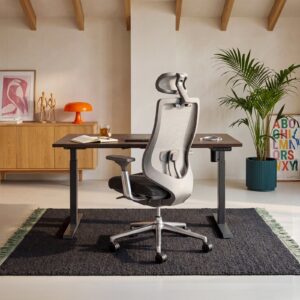
This is the most versatile category for a primary home-office chair. The useful technology is not a dramatic silhouette; it is the number of dimensions you can change without leaving the seat. Look for seat-height adjustment, usable seat-depth adjustment, lumbar position, armrest height and width, and a recline mechanism that can be locked or tensioned.
The COLAMY Atlas is a current example. COLAMY lists a two-inch seat-depth adjustment, four-direction armrests, adjustable lumbar support and several tilt-lock positions. Those features make it a useful reference point, but they do not prove that the chair fits every user. Compare the minimum and maximum settings with your own measurements and keep the return packaging until you have tested the chair at your real desk.
2. Full-Mesh Office Chairs
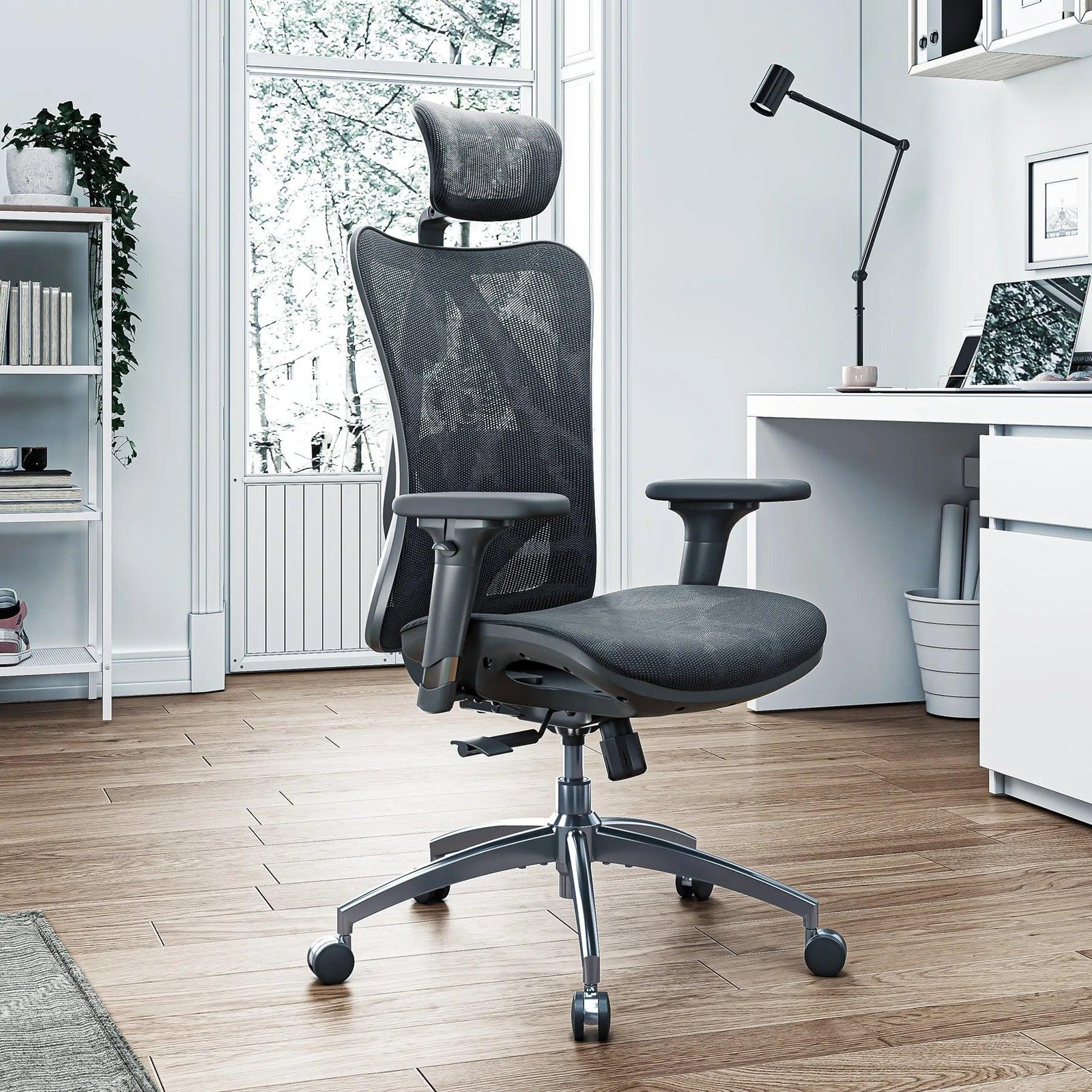
A full-mesh chair uses tensioned mesh for the back and seat instead of combining a mesh back with a foam seat. The main practical advantage is airflow. The tradeoff is that mesh tension, frame edges and seat shape matter more than a product photo suggests. A frame that presses into the thighs or a seat that is too long will not be corrected by breathability.
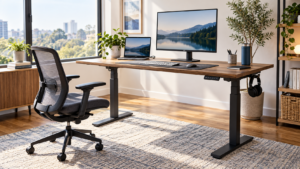
The SIHOO M57 is a representative full-mesh model. SIHOO lists three-direction armrests, adjustable lumbar support and recline up to 126 degrees. Before buying any full-mesh chair, check the usable seat dimensions, the frame around the seat and whether the lumbar piece can reach your lower back without pushing you forward.
3. Compact Task Chairs
Compact task chairs are designed for smaller rooms, narrow desk openings and lighter visual weight. Flip-up arms can let the chair move under a desk, and a shorter back can reduce the space the chair occupies. The compromise is usually fewer adjustments and less support during long sessions.
The Hbada task-chair family is a common example of this category. The current Amazon listing associated with the older Hbada compact-chair link may change by model or seller, so verify the exact product title, dimensions and return terms. This type makes the most sense when desk clearance is the first constraint, not when the user needs maximum seat-depth, lumbar and armrest adjustment.
4. Adaptive-Lumbar or Sacral-Support Chairs
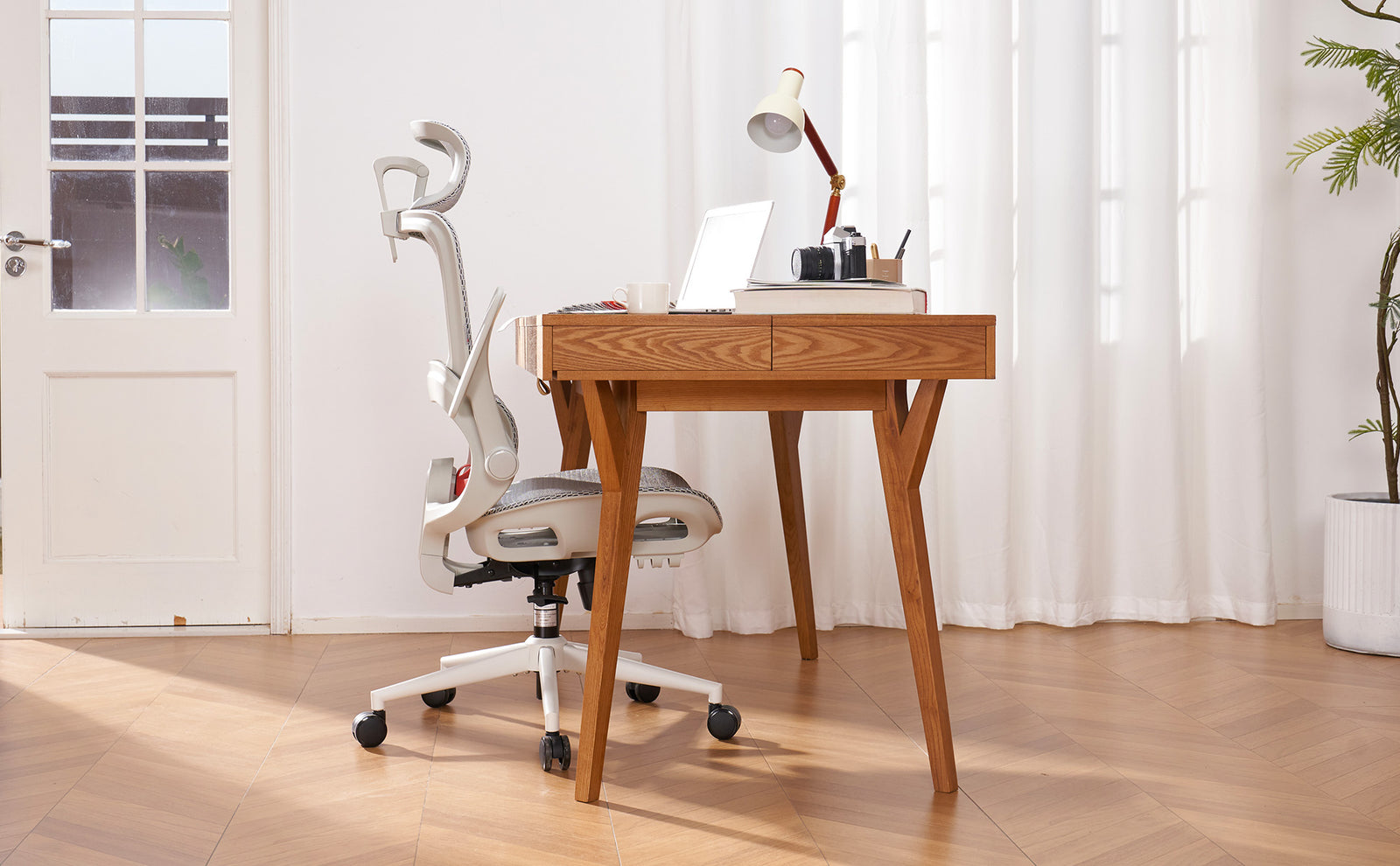
Adaptive-support chairs use a floating, sprung or articulated support section intended to stay in contact as the user changes position. This is a more technological alternative to a fixed lumbar pad. The mechanism can be useful when it has enough height and depth range, but the word “adaptive” does not guarantee fit.
The SIHOO B100 illustrates this category with a floating sacral-support section, a three-position recline and flip-up armrests. SIHOO currently sells cushioned-seat, mesh-seat and footrest variants, so confirm the exact configuration. Compare the chair's support location with your seated position; a responsive mechanism in the wrong place is still the wrong fit.
5. Executive High-Back Chairs
Executive chairs usually combine a high back, thicker foam and leather, faux leather or fabric upholstery. They can feel softer at first contact and suit a traditional office aesthetic. Their limitations are often hidden in the specification sheet: fixed armrests, a deep seat, limited lumbar adjustment or a simple center-tilt mechanism.
Choose this type for its dimensions and usable controls, not only for the padded appearance. Check whether the armrests fit beneath the desk, whether the seat depth lets you use the backrest and whether the upholstery warranty covers normal daily use. Compare current executive-chair options on Amazon.
6. Big-and-Tall Office Chairs
Big-and-tall chairs are not merely standard chairs with a larger weight number. A suitable model should combine the required stated capacity with a seat that is wide and deep enough, an appropriate seat-height range, armrests that are not too narrow and a reinforced base. A very deep seat can be a poor fit for a shorter user even when its capacity is adequate.
Check the exact manufacturer's capacity, seat width, usable seat depth, arm spacing and warranty. Do not rely on “oversized” in the title. Heavy-duty models can also be heavier to assemble and return, so the seller's return policy is part of the purchase decision. Compare current big-and-tall chairs on Amazon.
7. Kneeling Chairs
Kneeling chairs use an angled seat and supports for the shins. Some models, such as the Varier Variable balans, use curved runners that allow gentle rocking and position changes. This is an active-sitting category, not a universal all-day replacement for a conventional chair.
Check the user's knee tolerance, the desk height and how easily the chair can be entered and exited. Start with short sessions and keep a conventional adjustable chair available. The useful question is whether the design adds a comfortable alternative position to the day, not whether it forces one posture for hours. Compare kneeling-chair options on Amazon.
8. Saddle Stools
A saddle stool has a contoured seat that encourages a more open hip angle and often sits higher than a standard chair. It can work well with a height-adjustable desk or for tasks that require frequent movement between work surfaces. Many models omit a backrest and armrests, which reduces bulk but also removes support.
Verify the seat-width and height range, then check whether the stool's minimum height is compatible with the desk. A foot ring can matter when the feet do not stay supported. Users who want a saddle shape with more conventional support can also compare products such as the HÅG Capisco or Humanscale Pony rather than choosing a basic rolling stool. Compare saddle stools on Amazon.
9. Balance-Ball Chairs
Balance-ball chairs place an exercise ball inside a rolling frame. The Gaiam Classic Balance Ball Chair is one recognizable example. Gaiam lists a 52-centimeter ball, locking casters and a 24-to-25-inch sitting height for the current model. Those dimensions can be too high for some fixed desks, so measure before ordering.
This type is better considered an occasional active-sitting option than an automatic primary chair. The user still needs supported feet, a reachable keyboard and a stable way to sit down and stand up. Check the ball size, frame stability, height range and replacement-ball availability. Compare balance-ball chairs on Amazon.
10. Gaming-Office Hybrid Chairs
Gaming-office hybrids are designed for a desk used for both work and play. Current models range from foam racing-style seats to breathable mesh designs. The technology can include synchronized tilt, four-direction armrests, adjustable lumbar mechanisms and deep recline. Decorative bolsters and a large recline range do not replace a good working position at the keyboard.
The Razer Fujin Pro is an example of the technology-heavy end of the category, with a mesh seat and back, synchronized tilt, height-and-depth lumbar adjustment and four-direction armrests according to Razer. Before paying for premium features, compare the supported height and weight range, seat depth and warranty with less expensive office chairs. Compare current gaming-office hybrids on Amazon.
How to Choose Between the Ten Types
Start with four constraints: body dimensions, desk clearance, session length and how much movement you want. Then use the category to narrow the search.
- Choose a fully adjustable ergonomic chair when one chair must cover long work sessions or more than one user.
- Choose full mesh when airflow matters, but inspect the seat frame and tension.
- Choose a compact task chair when the desk opening and room size are the first constraint.
- Choose adaptive lumbar when you value support that follows position changes and can verify its fit range.
- Choose executive upholstery for a softer, traditional feel only after checking the controls and seat depth.
- Choose big-and-tall construction when the stated capacity, seat size and arm spacing match the user.
- Treat kneeling, saddle and balance-ball designs as alternative positions that may complement a conventional chair.
- Choose a gaming-office hybrid when work and gaming share the same setup and the adjustment range justifies the price.
Our seven office-chair measurements checklist explains how to compare seat height, depth, width, armrests and desk clearance before ordering.
FAQ
Which type of office chair is best for working all day?
A fully adjustable ergonomic chair is the most flexible starting category for long sessions because it can offer adjustable seat depth, lumbar position, armrests and recline. The best model still depends on the user's measurements, desk clearance and the manufacturer's adjustment range.
Is a mesh office chair better than a padded chair?
Mesh can improve airflow, while padding can feel softer at first contact. Neither material guarantees a better fit. Compare usable seat depth, frame edges, lumbar contact, upholstery durability and the controls available on the exact model.
Can a kneeling chair or balance-ball chair replace a normal office chair?
These products are better treated as alternative active-sitting options. Start with short sessions, confirm desk and body fit, and keep a conventional adjustable chair available rather than assuming one active position should be held all day.
What should I measure before ordering an office chair?
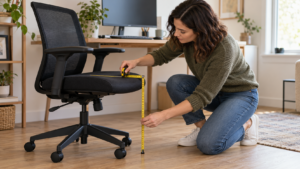
Measure lower-leg height, thigh length, seated width, relaxed forearm height, elbow spacing and the complete desk opening. Then compare those numbers with the exact model's seat, armrest and capacity specifications.
CTA: Compare the Right Category
Use the ten Amazon comparison links in the table above to check current models in the category that matches your real constraint. Verify the live dimensions, seller, price and return policy before ordering, and save the box until the chair passes a complete work-session test.
Affiliate Disclosure
This article contains Amazon affiliate links. If you buy through these links, Smart Workspace Guide may earn a commission at no extra cost to you. Prices, stock, seller identity, model configuration and return terms can change. Product photographs are official manufacturer images used to identify the real products discussed; they are not evidence of hands-on testing.
Sources Checked
- OSHA Computer Workstations Purchasing Guide
- COLAMY Atlas official product page
- SIHOO M57 official product page
- SIHOO B100 official product page
- Varier Variable balans official product page
- Gaiam Classic Balance Ball Chair official product page
- Razer gaming-chair overview
About The Author